Monica Epp
Women TalkingMonica Epp is a formative but largely remembered presence in the account: August Epp’s mother, a teacher of girls in the Molotschna Colony, and the person whose care helped unsettle his belief that ordinary childhood desires made him sinful. After the family left for England, her informal lessons and quiet acts of reassurance persisted in August’s memory and, through Ona Friesen, in the women’s debate about knowledge, faith, and their future.
Identity and Background
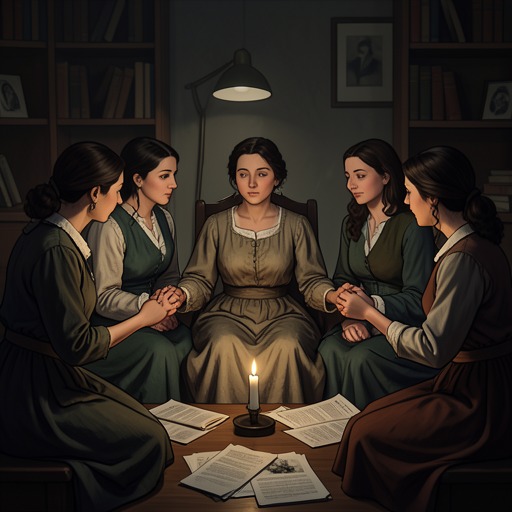
Monica was August’s mother. When he was twelve, his parents were excommunicated by the bishop then leading the Molotschna Colony and moved to England. That bishop was Peters’s father, preceding Peters in the office. August later learned to read and write in England, but his account locates an earlier education in Monica’s own teaching: she gathered girls during milking for what she called the secret schoolhouse. It was not a building but a discussion, held when August and Ona were children and before he left the colony with his parents.
The school’s informal character matters. Its lessons took place alongside the women’s work, outside the colony’s ordinary schoolhouse, and created a setting in which girls could receive knowledge Monica considered worth sharing. The account gives one concrete example: Ona’s understanding of the monthly replacement of the uterine lining came from something Monica had taught her long before the women’s meetings. Monica’s instruction thus survives not as a formal institution but as remembered knowledge carried by one of her pupils.
A Mother’s Response to Childhood Guilt
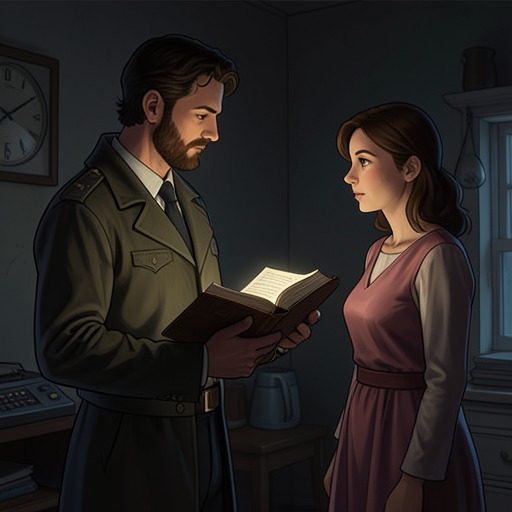
In England, August tried to make sense of why his family had been forced to leave. For years he believed the cause was that he had stolen pears from a farm in the neighboring Chortiza Colony. He also felt guilty about his thoughts and ambitions, including his drawings and his wish to be strong and win at sports. Seeking punishment and confession, he carried stones from the garden fence to a field and arranged them to spell his name and the word confession, hoping God would find him. The stones’ removal was noticed by Monica, who followed the wheelbarrow rut to the field and found him there.
Monica sat with him, put her arms around him, and first let him explain what he thought he had done wrong. She laughed at his confession, then apologized for laughing. Rather than confirm his fear that he deserved punishment, she told him he was a normal boy and a child of a loving God. She did not dismiss the practical consequence of his actions: the neighbors were concerned about the disappearing fence, so the stones had to be returned. Her response joined spiritual reassurance to an ordinary responsibility, separating the need to repair the fence from August’s belief that he was fundamentally guilty.
Years later, August recounted this episode to an older librarian in England. The librarian offered a different interpretation of his distress, describing his need for forgiveness as unusually deep and extending it beyond the specific childhood incidents he had named. The contrast does not erase Monica’s care; it shows how the memory of her response became part of a longer attempt to understand August’s shame and his difficulty accepting his place in the world.
Lessons Carried into the Women’s Debate
Monica’s teaching reaches the women’s meetings through Ona. When Ona explains that she learned about the body in Monica’s secret schoolhouse, August recognizes the source of knowledge that the colony’s usual arrangements had not supplied to women. Later, Ona’s proposals for a different community echo lessons Monica had given the girls: women and men would make decisions collectively, women would be allowed to think, girls would learn to read and write, and a map of the world would help them understand their place in it. Ona also proposes a new religion developed from the old and focused on love. August recognizes the resemblance as nearly verbatim, and Ona’s attempt to meet his eyes makes the remembered lesson feel at once present and lost.
That inheritance gives Monica’s small, informal school a consequence beyond the transfer of facts. In the debate, women confront the limits placed on their access to knowledge and on their ability to interpret religious teaching for themselves. Salome argues that women cannot assess what the Bible says when they are unable to read it and rely on male interpretations passed down to them; Ona identifies illiteracy as a disadvantage in negotiating those interpretations. The meetings also consider whether leaving would better uphold pacifism, protect children, and prevent the women from being drawn into violence. Monica is not present to take part in these arguments, but the education she gave Ona helps make such independent reasoning imaginable.
Memory, Loss, and Continuing Influence
Monica died while August was imprisoned in England. His father had disappeared years earlier, and he had no siblings; he also explains that Monica underwent surgery after his birth that meant he had no brothers or sisters. In prison and after it, August therefore remembers a mother who is absent but still essential to how he understands care, faith, and learning. The account does not present her as the leader of the later women’s decision or attribute their choices solely to her. Instead, her influence appears in the specific ideas and knowledge that have traveled from a childhood conversation to Ona’s speech in the hayloft.
Monica’s legacy is consequently both intimate and communal. With August, she answers self-condemnation with affection and a more generous understanding of childhood. With Ona, she leaves behind knowledge acquired beyond the formal structures that restricted girls’ education. And through the proposals that recall her lessons, the memory of the secret schoolhouse becomes a quiet precedent for women imagining shared authority, literacy, and a faith expressed through love.